Warehouse automation has moved from a competitive advantage to a business necessity. As supply chains become more complex and customer expectations continue to rise, companies are under increasing pressure to deliver faster, more accurately, and at lower cost.
At the same time, labor shortages and rising operational expenses are making traditional, manual processes harder to sustain. Automation is no longer just about innovation, it’s about survival.
For companies exploring this space for the first time, the challenge is not understanding why automation matters, but where to begin.
What Warehouse Automation Really Means
At its core, warehouse automation is about using technology to reduce manual effort and improve efficiency. This can include robotics, software systems, sensors, and data-driven decision-making tools working together to streamline operations.
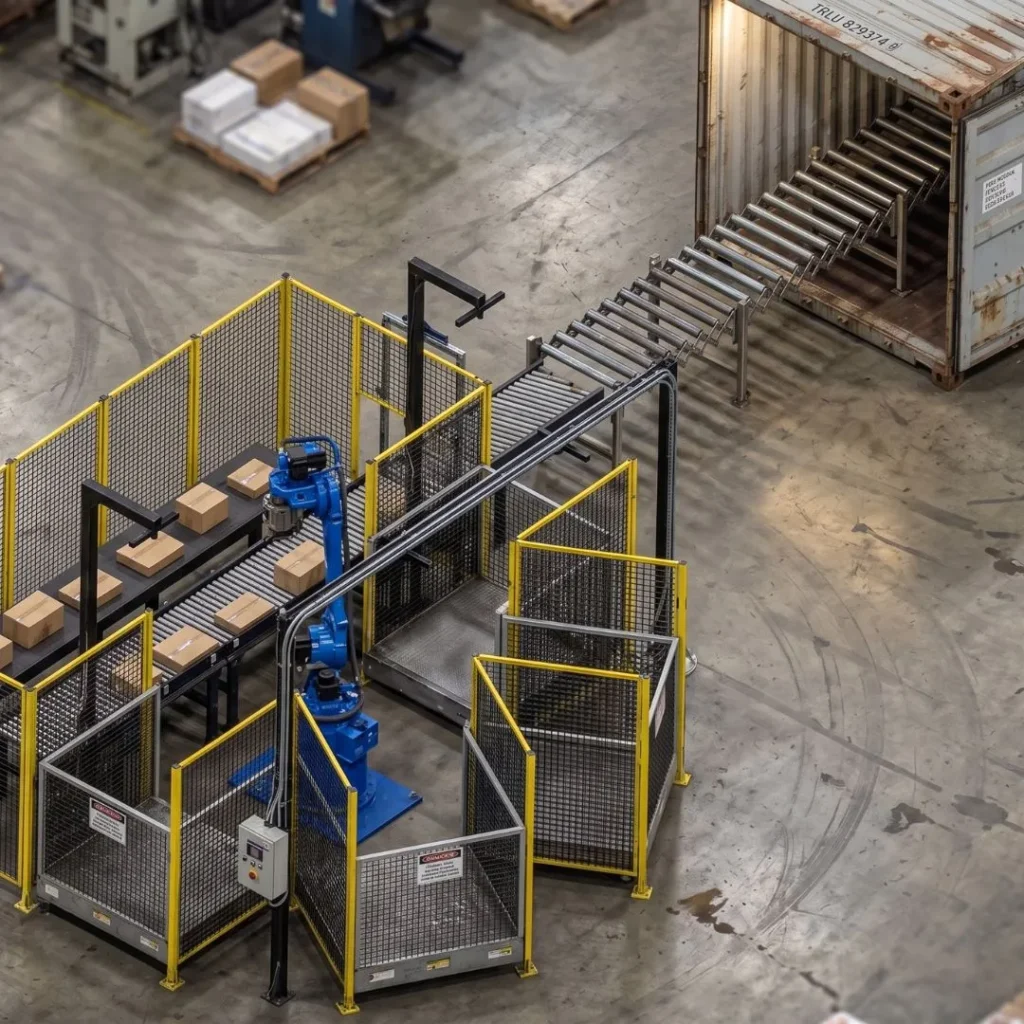
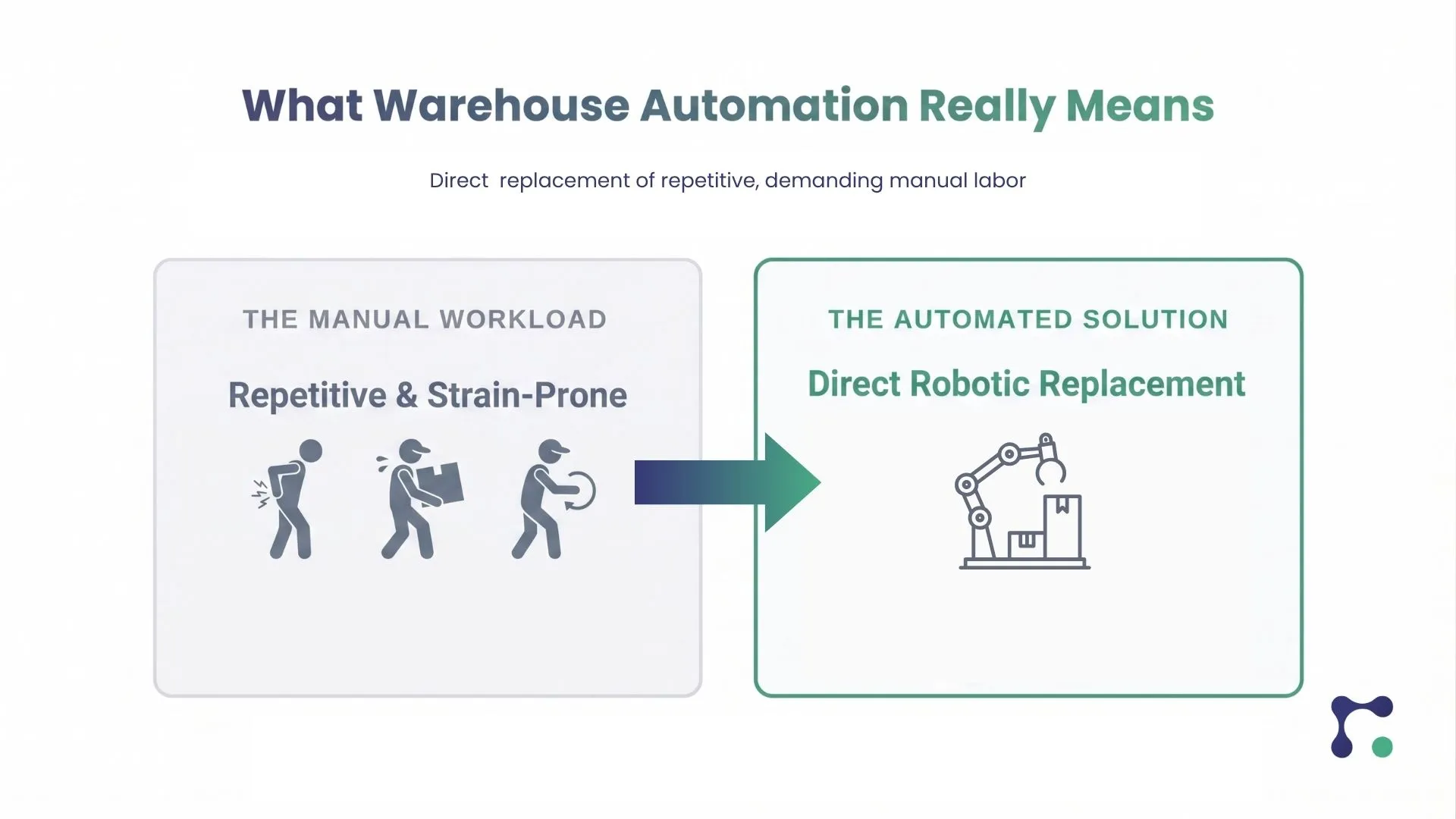
For highly manual processes, such as palletizing, automation directly replaces humans who exclusively perform repetitive, physically demanding, and error-prone tasks. By handing these specific roles over to machines, warehouses can completely eliminate the need for manual labor in those areas and significantly reduce their overall labor dependency.
The Building Blocks of Warehouse Automation
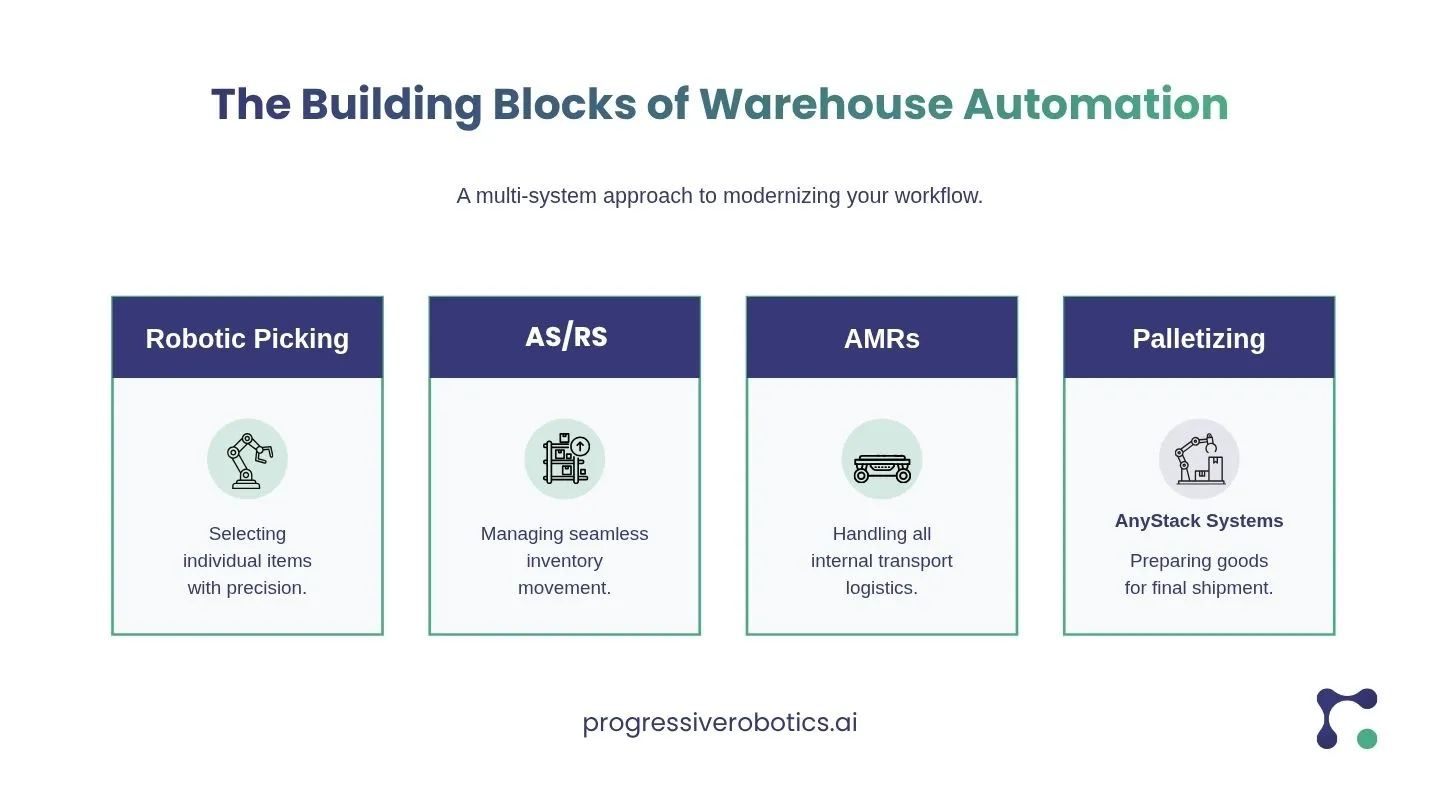
Warehouse automation is not a single solution but a combination of systems that address different parts of the workflow.
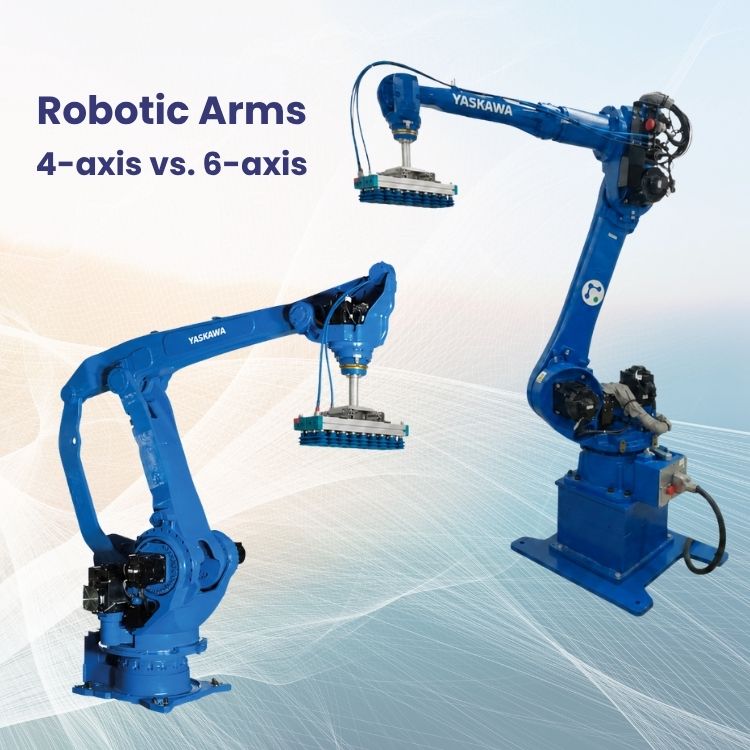
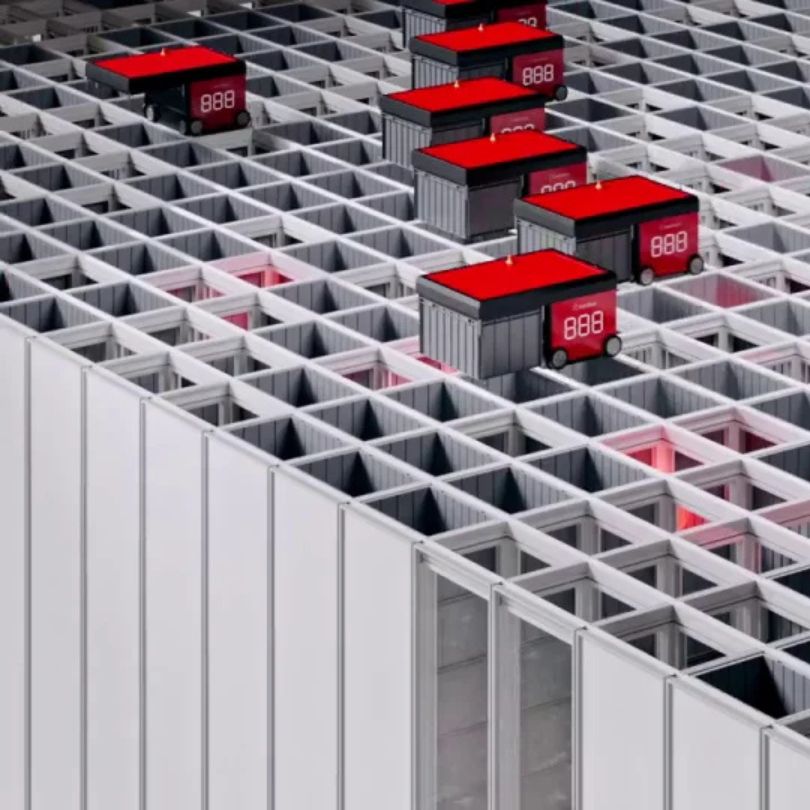
For example, robotic picking systems focus on selecting individual items, while automated storage systems manage inventory movement. Autonomous mobile robots handle internal transport, and palletizing systems (like the AnyStack palletizer) prepare goods for shipment.
Each of these plays a role in creating a more efficient and scalable operation. The key is understanding which areas will deliver the most impact based on your specific needs.
Why Palletizing is Often the Best Starting Point
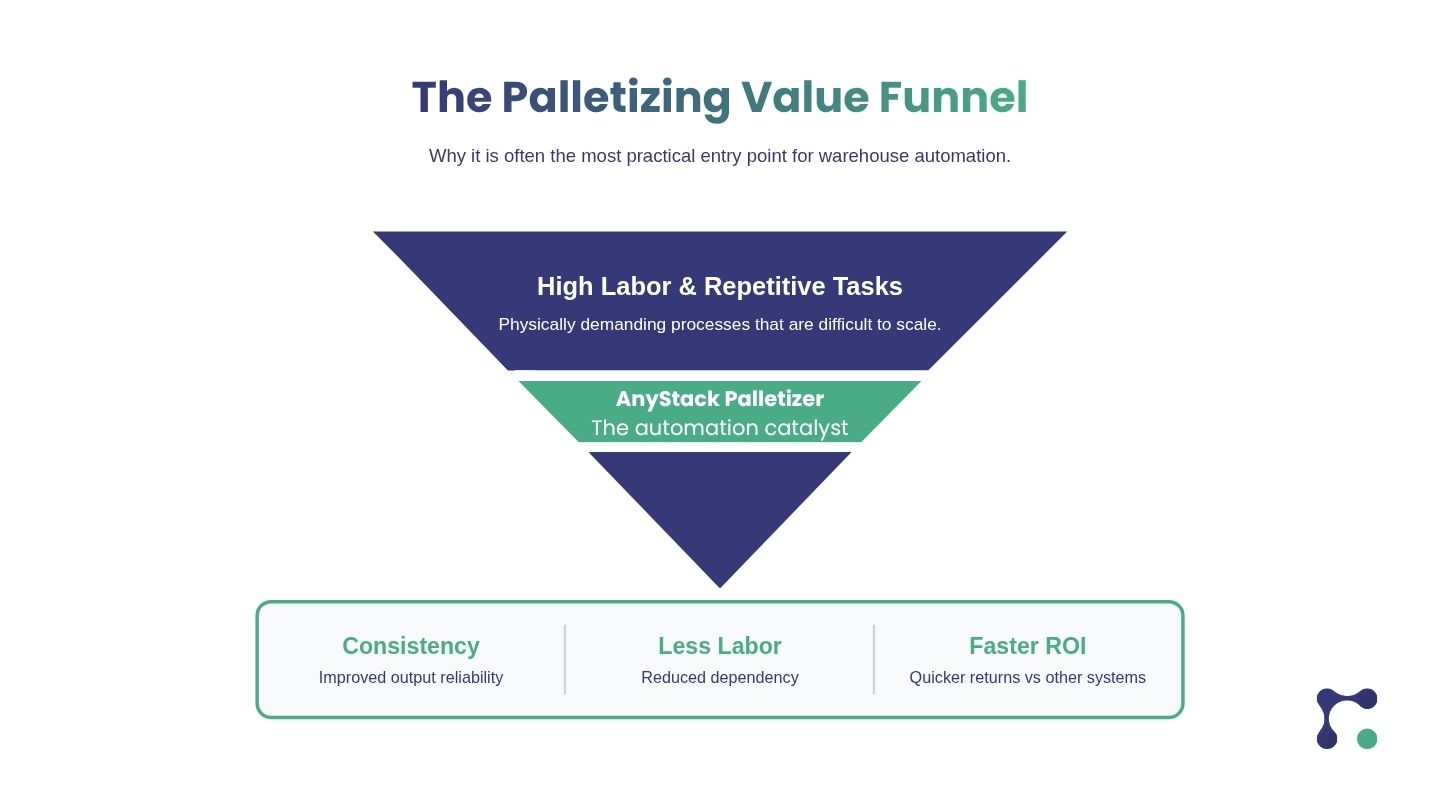
Among all manual processes, palletizing stands out as one of the most practical entry points for warehouse automation, either on inbound or on outbound.
It is typically labor-intensive, repetitive, and physically demanding, making it difficult to scale with human workers alone. At the same time, it has a direct impact on throughput and shipping efficiency.
Automating palletizing can deliver immediate benefits, including improved consistency, reduced labor dependency, and faster processing times. In many cases, it also offers a faster return on investment compared to other types of automation.
The Rise of Intelligent Warehouse Automation
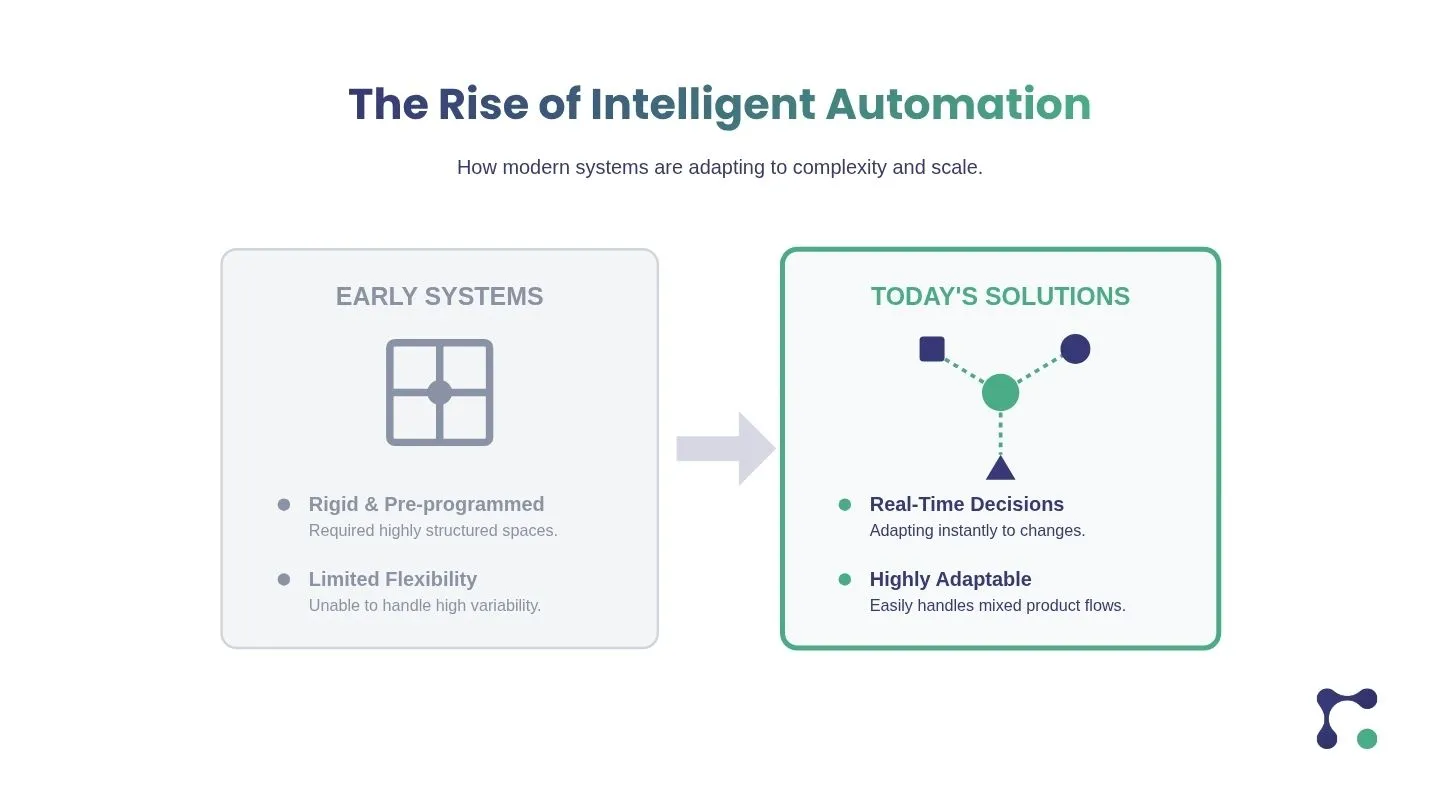
Automation itself is evolving. Early systems were rigid and required structured environments to function effectively. Today’s solutions are becoming increasingly flexible and intelligent.
Modern systems can adapt to variability, handle mixed product flows, and make decisions in real time. This is particularly important in environments where product diversity and demand patterns are constantly changing.
As a result, companies are no longer limited to highly controlled use cases. Automation is becoming accessible to a much wider range of operations.
How to Get Started
Getting started with warehouse automation does not require a complete overhaul of your operations. In fact, the most successful implementations often begin with a focused approach.
It starts with identifying bottlenecks – areas where manual processes are slowing things down or driving costs up. From there, businesses can evaluate the potential return on investment and prioritize solutions that offer both immediate impact and long-term flexibility.
Choosing the right technology is also critical. Systems that are adaptable, scalable, and easy to integrate will provide far more value over time than rigid, highly customized solutions.

Common Pitfalls to Avoid
While automation offers significant benefits, there are also common mistakes that can limit its effectiveness.
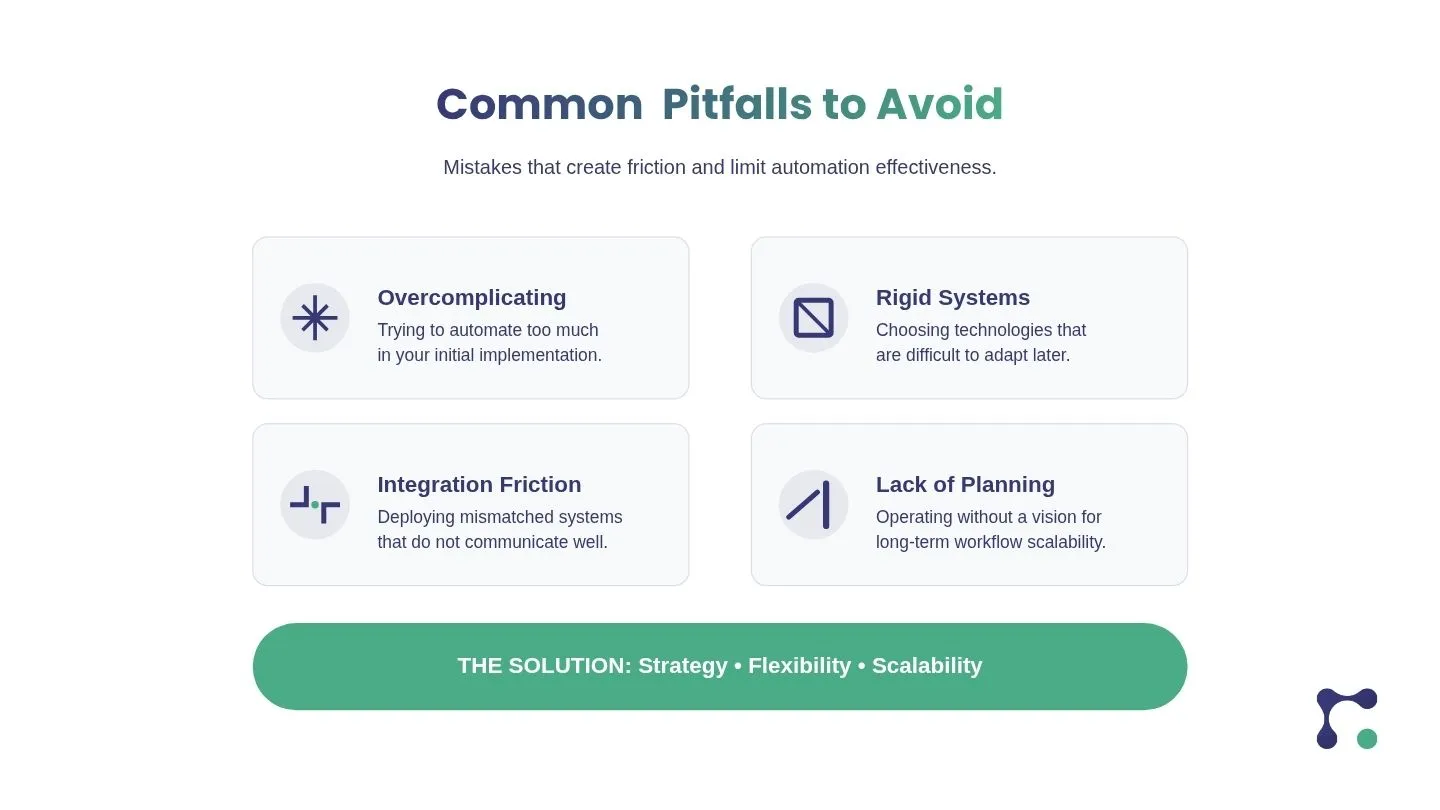
Many companies overcomplicate their initial implementation, trying to automate too much at once. Others choose systems that are too rigid, making it difficult to adapt as their operations evolve. Integration challenges and lack of long-term planning can also create unnecessary friction.
Avoiding these pitfalls requires a clear strategy and a focus on flexibility and scalability from the beginning.
.
Final Thoughts
Warehouse automation in 2026 is not about chasing the latest technology, it’s about building resilient, efficient operations that can adapt to change.
Companies that succeed in this space are those that take a pragmatic approach: starting with high-impact areas, choosing flexible solutions, and scaling over time.
In a world where complexity is only increasing, automation is no longer optional. It is the foundation for staying competitive.
Contact us today and take your first step towards warehouse automation.